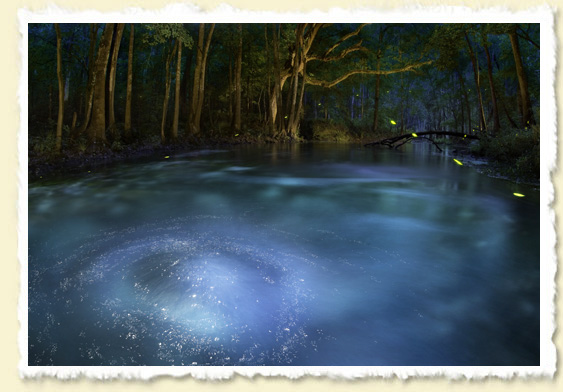
 Yesterday in class, our group chose the passage on page 40 in Power about religion. We had a good discussion about it, but after class I thought even more about it, since I wasn't focusing on Hugh Chavez and Latin American Politics, and I think one of the reasons why she has such a hard time with the preacher is because her belief in nature is so strong. This contradiction shows when Linda Hogan writes, "He believes in angels, children with wings in the sky, but he doesn't believe in what's on earth or birds; he says it's all an illusion, this life on earth, a dream, a miserable place we will one day escape into the golden streets of heaven (40)." In the very beginning pages, we read about how aware Omishto is of the nature that surrounds her. We get a very vivid description of all the senses she's taking in while she's in her boat on the pond. She even states, "this place I call mine" on page 2 while talking about her time in nature. Religion is hard for her to grasp because it's not tangible. She can touch, feel, hear, taste, and see nature, but no one really knows about "heaven" because there have been no first-hand accounts from such a place. What we are told are from The Bible which is thousands of years old, and some are still very skeptical about what the Bible says. So, as long as she remains so connected to nature and what she sees in front of her face, she is going to have problems believing in the religion of her mother and the preacher.


1 hour ago


It is interesting that you wrote about how we can use our senses to appreciate nature, but we can only trust that there is a heaven. Although I don't think that this is the reason Omishto is more partial to the natural world, I think that it is a very interesting observation!
ReplyDelete